TECHNOLOGICAL JOURNEY THROUGH MY PROFESSION

It is pleasure to explain my involvement in technology assisted learning process. I started using technology during my postgraduate studies in India. I believe the cultural and socioeconomic factors somehow affected my entry into the world of technology. The power point presentation and smart classrooms I have experienced only in my late life classrooms. Fortunately, the technological bloom opened doors to me, catch up the world outside India. Afterwards, the main medium I am using in learning process is computer technologies including social media and various applications to support my learning process.

As Scott (2010) describes social media is a platform where people can share the ideas, thoughts, creativity and content in online. Social media includes social networking sites such as Facebook, YouTube and WhatsApp. Now a days these technological applications are quite common in our place and recently I have known more about Twitter and Blogs and started to use those platforms also for my personal development and collaborative learning.

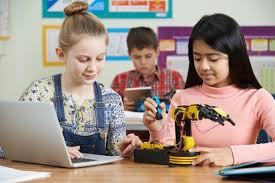
Benefits Of technology for teachers

  • Facilitates sharing of resources, experiences and innovative ideas not only in the school zone but also worldwide
  • Attaining technological skills, confidence and professional development
  • The visual representation or technology assisted teaching increase the rate of imparting concepts in more understandable way
  • It helped to make creative lesson plans in easy ways thus assuring better teaching practices
  • It increased the flexibility for when and where the lessons carried out without any demographic limitation
  • Increased passion for learning new ideas among colleagues and applying it their day to day environment

Benefits of technology for students

  • Higher quality lessons and content transmission in fast track process
  • Better understanding of the concepts.
  • Students who use educational technology, feel high self-confidence
  • More motivated to learn and becomes more successful in life.
  • Encouragement of independent active learning and create self-responsibility for learning.
  • Development of writing, reading, literacy and numeracy skills.
  • Students can focus their deficient area and seek support and assistance which further help to excel in those areas.

Importance of TPACK framework

It is widely recognized that learners are motivated and purposefully engaged in the learning process when concepts and skills are underpinned with technology and sound pedagogy. The TPACK (Technological Pedagogical Content Knowledge) framework helpfully demonstrates that there is a complex interplay between Technological Knowledge, Content Knowledge and Pedagogical Knowledge and Contexts (Mishra & Koehlor, 2006). Technology is not forcing the educators to try and determine one best way to do things rather than it gives an idea of how integrating technology can work best when teachers are aware of the component; content knowledge, pedagogical knowledge and context.

We are living in a fast track digital world. ICT (Information and Communication Technology) has an impact on every aspect of our lives – from working to socialising, learning to playing. The digital age completely changed the life of new generation people such as communication, networking, seeking help and advice, accessing information and learning process. Most of our children, young minds, adults and even old age people access technology through a variety of means such as computers, TV and mobile phones. As technology becomes more and more embedded in our culture, we must provide our learners with relevant and contemporary experiences that allow them to successfully engage with technology and prepare them for life after school. Nowadays education sector promotes advice on resources for practitioners, parents and pupils to engage with the technologies in order to inform and enhance the learning experience.

WHY?? Technology

There are many frameworks, theories and models underpinned with the education system. Integrating technology along with those practices can able to modify the learning experience of the child as well as the educator. The benefits of integrating technology in education is countless.  According to Isabelle and Lapointe (2003) integration of technology not only pace students learning but also improves teachers’ confidence and professional development. Teachers’ knowledge in technology based teaching, will improve the student learning process too. Otero et al (2005) recommended that in developed and developing countries, technology based curriculum help to foster students’ achievement also, promoting to develop a critical thinking and problem solving skills in students.

Imagine the classrooms with systematically arranged benches and literally a teacher standing in front of the students and delivering lectures inside the room. In those situation where students are passive learners and teacher act as a prime source of knowledge but, in reality, the teacher might be far behind the contemporary practices, critical thinking and problem solving skills. Despite, students push down to relay only on teachers knowledge whereabouts. Research signifies that teaching is a complex activity in this modern global world (Mishra & Koehlor 2006). In spite the teacher is a knowledgeable and capable person, it is not worth for a student solely depend on teachers’ perspective, knowledge and ideas in this competitive world. The potentials and capabilities of each person is different so getting completely knowledgeable and capable teachers are rare in the education system.

BLOOMMING TECHNOLOGY

Emerging technologies have potential impact on the educational field of the society. Day by day our education system is developing with the support of technology. As Rai (2014) commented technology revolutionized the educational field and created new paradigm in teaching and learning processes. In this 21st century it is significant to know why we should use technology in education and exploring the various concepts, possible purposes and processes of technology.

Reference

Rai, A. (2014). ICT in teacher education.International Journal of Languages, Education and Social Sciences,13, (1). ISSN: 2278-3970